Vertical Storage Systems
In a small home the floor is the most contested surface. Every cabinet, bin, and console that sits on it competes with the space people need to move. Vertical storage answers this by moving belongings up the wall and onto the backs of doors, freeing the floor for circulation and the few larger pieces that genuinely need it.
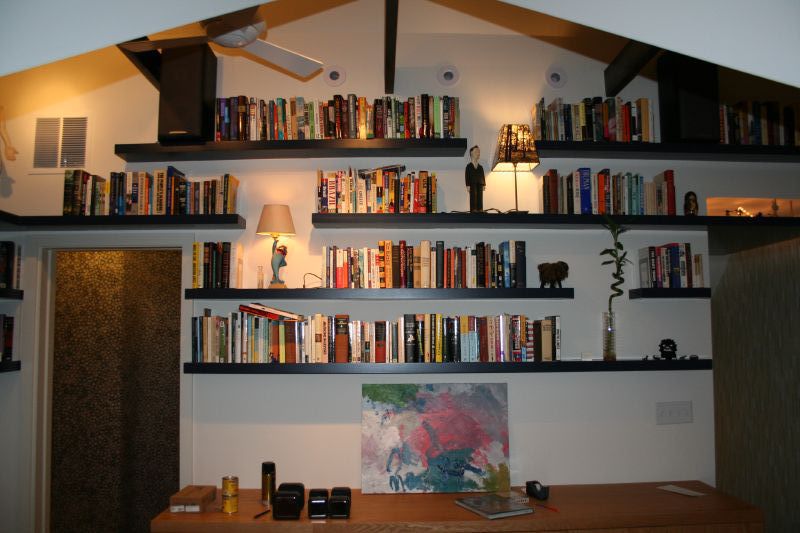
Start with the walls you already have
Before adding anything, look at the vertical surfaces a small unit offers for free: the area above doorways, the strip of wall between a counter and an upper cabinet, the back of a closet door, and the full height beside a window. These are often left blank in compact Canadian condos, where ceilings of 2.4 metres or more leave a usable band of wall well above eye level.
Three height bands
- Reach zone (up to ~1.8 m): daily items, open shelves, hooks.
- Display and light storage (1.8–2.2 m): books, baskets, seasonal bins.
- Top band (above 2.2 m): rarely used items in labelled boxes, accessed with a step stool.
Matching a system to the surface
Different walls suit different hardware. The table below pairs common small-space situations with a storage approach.
| Location | System | Best for |
|---|---|---|
| Open wall | Cleat or rail-mounted shelves | Books, plants, kitchen jars |
| Back of a door | Over-door rack | Shoes, cleaning supplies, pantry items |
| Narrow gap beside appliances | Tall pull-out or slim cart | Spices, bottles, trays |
| Entry wall | Hooks and a single floating shelf | Keys, mail, daily bags |

Mounting safely
Vertical storage only works if it stays on the wall. Loaded shelves can carry significant weight, so the fixing matters as much as the shelf itself.
- Locate studs where possible and fix brackets into them rather than into drywall alone.
- Use anchors rated for the expected load when studs are not available.
- Keep the heaviest items on the lowest shelves to lower the centre of gravity.
- Distribute weight across multiple brackets rather than concentrating it.
For renters: Where drilling is not permitted, tension-mounted shelving, freestanding ladder shelves, and over-door racks add vertical capacity without leaving holes. Confirm what your lease allows before mounting anything permanent.
How this connects to layout
Tall storage interacts with how a room is divided. A freestanding open unit can both store items and act as a soft partition, a tactic covered in Zoning a Studio Without Walls. When the storage piece also needs to fold, slide, or convert, the ideas in Multifunctional Furniture Layouts are relevant.
References
For drywall fixing guidance and general home maintenance, consult manufacturer instructions and resources from the Canada Mortgage and Housing Corporation.